Visited May 2025
| Location | Bath, Somerest |
| Entrance Fee | Yes |
| Railway Station Nearby | No |
| Parking | Nearby Park & Ride |
| Facilities | Gift Shop, Toilet |
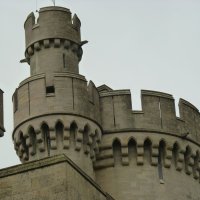
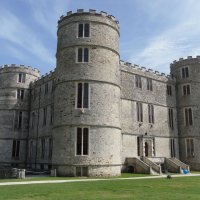
William Beckford (1760-1844) was a wealthy heir to his family's extensive fortune, which he inherited at the age of just ten years old. He used his money on his passion for collectng things- paintings, furniture and aestethic objects. He then built a tower on land at the bottom of his garden in Landsdown, Bath, to house all his treasures. This was originally called Lansdown Tower but it is now known as Beckford's Tower. The collection was sold off after his death and his pieces are now in many different museums across the world. The tower has recently been restored and opened to visitors and makes an interesting trip adding to the many tourist sites in Bath.


Review
Although most of Beckford's collection have now been split up and are in many different museums, the museum in the ground floor of the tower has retained some pieces to view. The museum also tells the story of his life, aiming to give a perspective on this priveliged man whose wealth was created from an unpleasant source- slave trading.
The museum doesn't suger-coat his involvement in the slave trade, and there are sections of the displays dedicated to his plantations. Despite making him very rich, he showed no interest in his holdings in Jamaica, never once visiting. Instead he chose to take a journey around Europe, visiting many countries. This exposed him to the art and culture that would be the catalyst for his collecting.


Beckford was married and had two children, but was also interested in relationships with men. One particular high-profile relationship was with William Courtenay, who was the heir to Powderham Castle . As Beckford was 19 at the time they first met, and Courtenay was 11, it was an abusive relationship on the side of Beckford. The affair was exposed when Courtenay was 14, and Beckford fled to Europe to escape prosecution, as homosexuality was still illegal at this time.
It was not long after that his wife Lady Margaret Gordon, died in childbirth. His two daughters were sent back to England to be raised by family members, and he stayed in Europe, hoping to ride out the publicity surrounding the affair with William Courtenay.


Beckford finally came back to England in 1796, and he built a large country house named Fonthill Abbey in Wiltshire. The abbey was constructed very poorly and had to be demolished in 1825 as the main tower had twice collapsed. By that time Beckford had sold the property, and moved to Bath. It was here that he settled and built his tower as a place for his collection. He didn't use the tower as a residential property, although now it houses a museum but is also available for rent as a holiday let.
The museum is housed in the ground floor of the building, but the main attraction is surely a trip up to the top of the tower. This is via a grand spiral staircase in the middle of the tower. On the first floor there is a roof terrace, with a decorative arch which frames the view over the cemetery, which was created when Beckford's garden was sold after his death. Then on the next floor, there is a narrow look out point, built around a large central coloumn. There are stunning 360 degree views. There is a further staircase up to the 'lantern' which is at the very top of the tower, but this is only open on certain days for guided tours.
The staircase up to the tower is beautiful , but sparked some debate in our family. Mum, who is usually not a fan of hieghts, marched up it without a problem, stating it was easier to climb that many of the spiral staircases we have tackled in castles over the years. However other members of the family found it terror-inducing; mainly because although it has bannisters to stop anyone falling, the centre of the staircase is open ( which Mum liked as it looks stunning to peek over the edge and see all the way down) This seemed to freak out the other family members though, who counter-stated that medieval castle staircases tend to be fully enclosed on both sides and so felt safer! The debate on this remains open- if you visit then maybe let us know your thoughts?
The grounds of the tower are now a cemetery, with Beckford's grave situated there in view of his beloved tower. At the far end of the cemetery is a small tunnel, recently restored. This was the tunnel that Beckford had built from his house to the tower, so he could walk there in private. The tunnel is now partly under the main road, so only a small part is visitable. It is nicely restored, but in our opinion not really the 'grotto' that it is billed as.


More info: Beckford's Tower