Visited February 2025
| Location | Shrewsbury |
| Entrance Fee | Yes |
| Railway Station Nearby | Yes- Shrewsbury |
| Parking | Town carparks |
| Facilities | Gift Shop, Toilets |
This is another of William the Conquerer's early castles, started in 1067 in the strategically important town of Shrewsbury. The area for the castle was cleared and approx. 50 houses were removed to make way for the build. William needed to gain control of the area close to the border with Wales, and this was an important 'Marcher' castle. It was a centre of military and administrative affairs on the frontier.


Review
The site of the castle was not huge, as it was constrained by the curve of the River Severn on the western side. This both aided in defence of the castle and town, but also caused structural problems which saw part of the motte collapse due to river erosion in 1271. This is the reason the surviving motte is D-shaped, rather than round as originally constructed.
The castle saw a lot of military action up until Wales was finally brought under Norman power after 1300. It started to then to fall into a dilapidated state, which was only halted when it was re-fortified during the Civil War. The Civil war fortifications cost the town of Shrewsbury a lot of money, yet it was only involved in a short siege which ended with the surrender of the Royalists forces within, without the firing of a single shot.


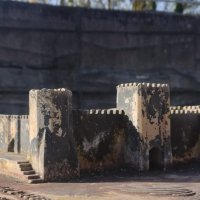
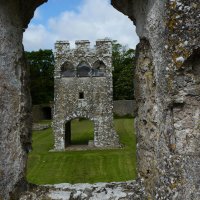
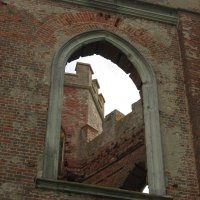
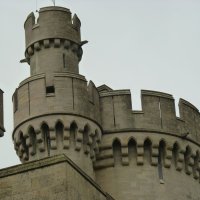
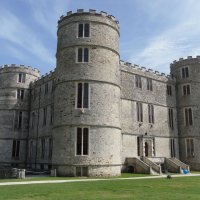
After the Civil War the castle was turned into a private residence, and work was carried out to the building by Thomas Telford, who was the County Surveyor for Shropshire at the time. He was responsible for adding the gothic arched windows, and re-building much of the castle walls. The patterned parapets also date to Telford's time. It was during this time that the then owner, William Pulteney built a summerhouse on top of the motte for his daughter Laura. The building still stands today, and is known as 'Laura's Tower'. It stands on the foundations of a much earlier look out tower which was in turn built on top of the reduced motte after it collpsed.
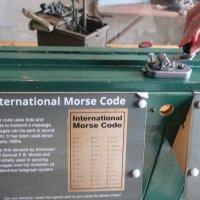
The castle has been the home of the Soldiers of Shropshire Museum since 1985. The displays are mainly in what was once the Great Hall of the castle, and the East Tower. We found the displays to be interesting to all ages, and there were children's trails available- when we were there it involved finding teddy bears dotted around the display cases. There was also the chance for some virtual target practice with a simulator . The day we were there the gun on the simulator was a SA80, but there are different weapons on different weeks. It was £1 a go, and Mum scored 0 points on her go! Never mind, she has no desire to join the army anyway!


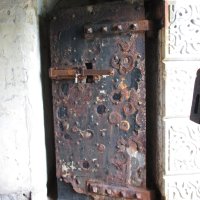
The grounds at the castle are not extensive, but are planted up well and are pleasant to stroll around. They also contain the remains of the postern gate, and the castle well which was enlarged and refurbished in the Victorian times. The current postern gate is an early 17th century replacement of an earlier gate, which may have been a sallyport, and gave important access to the River Severn . The entrance was blocked with the building of the railway station in the 1840's. For those arriving by train the station is literally a five minute walk away. There are toilets at the castle, but no cafe. However, as the castle is very well positioned in the town, there is no shortage of places to eat within close proximity .


More info: Shrewsbury Castle