Visited October 2025
| Location | Ashby de la Zouch, Leicestershire |
| Entrance Fee | Yes |
| Railway Station Nearby | No |
| Parking | Roadside |
| Facilities | Gift Shop,Toilets |
| Map |  |
The manor of Ashby was mentioned in the Domesday Book as Ascebi, and after the Norman Conquest was granted to a Breton family who went by the name of La Zouch. It gave the town that built up around it the name of Ashby de la Zouch. In the 15th century the manor came into the ownership of its most famous owner, William Hastings, a staunch supporter of the Yorkist cause. He was given the manor after the Battle of Townton, when the previous owner James Butler, the Earl of Ormand and a Lancastrian supporter was executed. Edward IV the Yorkist King, awarded land in the Midlands to his supporters, to break the dominanace of the Lancastrians in the area.


Review
So William Hastings received the Manor of Ashby in 1462, as well as the estate of Kirby Muxloe Castle, where he also built a grand castle. He was a man of much wealth and influence, and spent a lot of money on both castles, making Ashby de la Zouch the main family seat.
He didn't get much time to enjoy his castles though, as he was executed for treason in 1483 by Richard III. Work on Kirby Muxloe Castle stopped after his execution, and it remains unfinished to this day. However, his widow continued work on Ashby de la Zouch Castle, and in time Richard restored the castle to William Hasting's heirs.
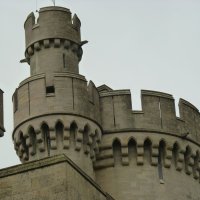
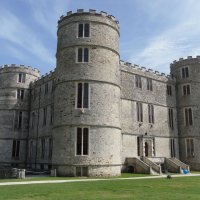
As a show of his great wealth, Hastings had built a great tower at Ashby, which was a nod to the great medieval castles of the past. Hastings wanted to show that he was a rich and influencial man. At Kirby Muxloe he built his castle in brick- a very expensive building material at the time. If Kirby is an example of a red brick castle, Ashby by comparison is built of sandstone, giving it a grey and yellow hue.


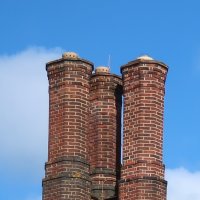
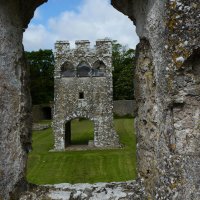
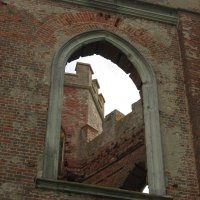
William Hasting's grandson George added the garden towers to the castle- these were used for entertaining and banqueting. They were both built in brick and they remain today, but in a ruinous state. It was also around this time that the gardens were developed- today the sunken trenches of was once a pleasure garden are all that remain.
The castle was briefly used to jail Mary Queen of Scots in 1569.
During the Civil War the castle was held for the King. Charles I stayed for a night in the Great Tower, which was considered an impressive stronghold. However, after several Parliamentarian successes in the town, the Hastings family surrendered the castle, and agreed that the fortifications which had been developed during the Civil War could be demolished.
The Earl then complained that the demolition had exceeded the new fortifications and had also damaged the living quarters of the castle (which it had!) There is a information board at the castle depicting the explosion which damaged the Great Tower, and it is possibly the most dramatic scene we have ever seen on a castle information board!


After the Civil War slighting the castle fell into disrepair, and the Hastings family built a new house on the land next door. The castle became a romantic ruin, and was used as a setting for a scene in the novel Ivanhoe by Sir Walter Scott in 1819. This caused tourists to flock to the castle, and it has been open to visitors ever since.
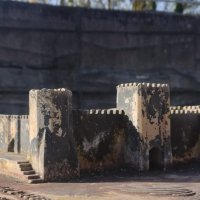
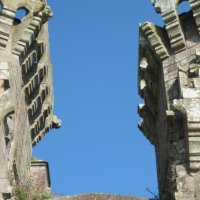
There is a decent amount to be seen on a visit to the castle. The Great Tower, with the whole of the back blown off after the Civil War, can still be climbed but the day we went it was closed due to high winds. There is also the Kitchen Tower, which housed a large kitchen capable of feeding a royal household. There were two large ovens for roasting, each with its own stone cauldron stand. Plus a bread oven, and a stone sink. Underneath the kitchen is a tunnel leading to the Great Tower. This can still be accessed and is lit just enough so that you can see, but still dark enough to add that bit of excitement of the unknown.
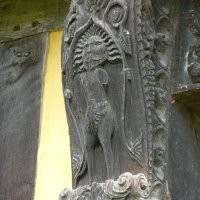
In the grounds are the two brick towers used for banqueting and entertainment, and a chapel with beautiful stone arches. There are tree trunks placed around the castle with details of particular patterns on them- these are for children (and of course big children also!) to try and locate the original pattern in the vicinity.
The castle has a gift shop and a toilet, but no cafe. There is disabled parking only in the car park, all other vehichles have to find parking out on the roadside. It is possible to make a day of it and visit Ashby & Kirby Muxloe castles both on the same day if you so wish.


More info: English Heritage Ashby Castle