Visited April 2025
| Location | Poole, Dorset |
| Entrance Fee | Yes- National Trust |
| Railway Station Nearby | Yes- Poole |
| Parking | Yes- town car parks |
| Facilities | Cafe, Gift Shop, Toilets |
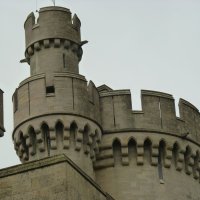
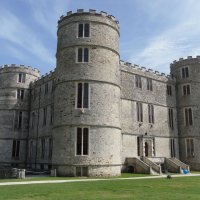
Brownsea Castle is situated on Brownsea Island which is just off the coast of Poole. The Island is owned by the National Trust and can be visited; the castle however is leased to John Lewis as a staff hotel and therefore is not open to the public but can be viewed from the outside. Having said that, there are many things to do on the island, so I have reviewed the island as a whole, rather than just the castle.


Review
The boat over to the island can be found along the main sea front of Poole. It takes about 20 minutes or so to cross to the island, and the castle is on the same side as the landing stage so a good view can be gained from the boat as it approaches. The National Trust charge an entrance fee to get onto the island, so as soon as you disembark you have to walk through the ticket office. If you would prefer not to land on the island there are boat trips which offer cruises around the bay and you can get a good view of the castle on one of those trips.


Brownsea Island has been inhabited for over 2000 years, but the castle as we see today was first built in Henry VIII's reign as a military blockhouse. Work started to convert it into a house in about 1722 after the island was bought by an architect called William Benson. He was interested in botany and was responsible for planting over 10,000 trees on the island.
Later it became the property of Marcus and Florence van Raalte. The pair used the island as a holiday retreat and hosted grand social gatherings. During this time the islanders started to grow bulbs to sell in markets, under Florence's guidance. The community was thriving, and the couple were very popular. After Marcus died Florence kept things going, but after she left for good a new owner called Mary Bonham Christie bought Brownsea. She started a whole new chapter in the island's history. The complete opposite of the party-loving van Raalte's, she was a recluse who sent all the islanders back to the mainland so she could live in seclusion and turn the island back to its natural state. Brownsea became 'forbidden' . She lived on the island until 1961, when she died. The island then came under the care of the National Trust, as it remains to this day.


The main attracttion of the island for today's visitiors- apart from the chance to view the castle exterior of course- is the wildlife. To the north there is the Wetlands Centre where visitors can observe the wildlife in the area. The wetland area itself has no public access as it is designated a quiet area for wildlife.
The central and southern part are wooded, with some beautiful walks through the trees, including a 'calming woodland walk'. There is also a natural play area for children. The most exciting (for us) part of the wildlife of the isalnd was the chance to see some red squirrels- Brownsea has them in abundance. Except not wherever we were. Despite other visitors telling jolly tales of how many they saw and how enchanting they were, we managed to spot not a single red squirrel at all! Apparently they are especially visible in the churchyard. We wandered around the churchyard for ages in the hopeful optimism that we would see them- but still no banana- or more specifically- no squirrels (see also Caldey Priory for more tales of squirrel disappointment)
On the west side visitors can enjoy some time on the beach, and see the site of the pottery and pottery workers village which was established on the island in 1852, only to fold after a few years later when it was clear that the local clay wasn't suitable for making the fine china the owners had anticipated. The village has all but gone now, save for some clumps of house foundations.
Other buildings on the island include the castle, built on the same spot as the original Henry VIII blockhouse which housed soldiers defending the harbour. Subsequent owners added extensions and turrets to make it more 'castle like'. The church is also open to visitors- and still has services on a Sunday in the summer months- even though its actual parish has dwindled in numbers. 'The Villano' is today the site of the cafe (highly recommended by the way) but was originally built as the island's lifeguard station. It is the first building you see when disembarking the boat.
The island is reasonably compact and easy to walk from east to west in less than an hour. It makes a great day out for the kids as there is so much to see along the way. If your kids really like a slice of wildlife with their castle, then this is the place to bring them! There is also a campsite and some bunkhouse style accomodation on offer if you want a longer stay.


More info: National Trust Brownsea Island