Visited November 2025
| Location | Chester |
| Entrance Fee | No |
| Railway Station Nearby | Yes- Chester |
| Parking | City Centre |
| Facilities | City Centre |
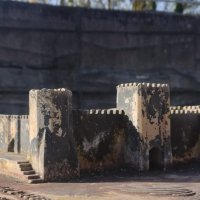
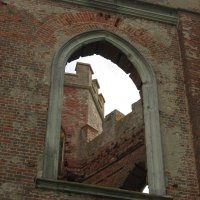
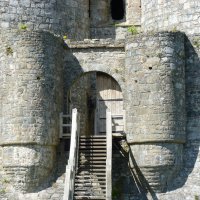
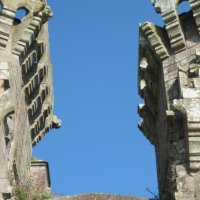
Once a hugely important castle which guarded the route to North Wales, Chester Castle was originally built in wood by William the Conquerer, and later upgraded to stone. Once a much larger structure, the remains we have today are all that is left after a fire in the nineteenth century.
In addition to the castle, the City of Chester has some very well-preserved city walls which are still well used today as a means to get around the city.


Review
The castle remains are usually open Saturday and Sunday , April-October, assuming the availability of the volunteer team. We happened to find ourselves in Chester in November for other reasons than specifically to visit the castle, so the opening times were over for this year. Consequently we couldn't see inside the castle, but will endeavour to go back in the summer to visit again.
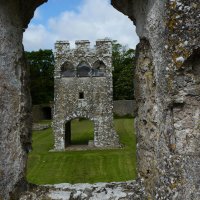
The main part of the castle which is open to visitors is the Agricola Tower, which contains a Norman Chapel with some fine wall paintings. The chapel is still consecrated and is used by the Cheshire Regiment . Visitors can climb to the top of the tower for views over the city. There is also a gun emplacement dating to 1745, which was put in place in response to Bonnie Prince Charlie's Jacobite rebellion. This can also be viewed from the top of the tower.
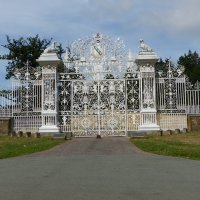
The ceremonial gateway to the castle was rebuilt in a neo-classical style in 1822, and today makes a very grand entrance to the car park sited in the castle bailey. This is also the site of the modern-day law courts- an association with maintaining law that has existed at the castle site since it was built.


Once you have visited the site of the castle, a walk along the City Walls is recommended. Parts of the walls date back to the Roman times, when Chester was a legionary fortress known as Deva. The fortress was the largest in Britain at the time. The layout of modern day Chester is still based on the layout of the fort.
Other parts of the wall are later, some Norman, and some from the Victorian era. The Eastgate clock, high up on the wall which crosses over the main shopping thoroughfare of Foregate Street, dates to the reign of Victoria. This Victorian clock sits on top of a stone Georgian arch, demonstrating the different eras that the walls span.
There is a section of the walls next to the Roman Gardens which was breached in the Civil War by the Parliamentarians who beseiged the city and castle in 1645. Despite this the city was not taken by force, as the Royalist garrisons held off any offensive. However the city eventually surrendered due to starvation. There is an info board in the Roman Gardens showing where the wall was breached.
Also in the Gardens are various fragments of Roman masonary excavated from around the city, including parts of a hypocaust from the military baths. It makes a nice place for a relaxing stroll and some benches for picnics if you require.
We used the walls to get around the city, high up for the views and away from the traffic. As usual, take care with little children whilst walking the walls.


In addition to the Roman Gardens, there are other Roman sites to see at Chester if you are interested. The amphitheatre is free to visit, and is one of the largest in Britain. It contains the remains of a shrine to Nemesis, who was also the choice of Roman goddess at the Amphitheatre at Caerleon (See Caerleon Castle and Roman Ruins)
Across the road from the amphitheatre is the remains of a Roman Tower on the Fortress walls. It is worth a quick swing by if you are already at the amphitheatre.
There are many other attractions for families at Chester- museums, play areas, even a miniature railway at Grosvenor Park (sadly closed the day we were there so we couldn't test it!) Nearby Chester Zoo is also appealing to children. There are many shops, cafes and other facilities in the city, so you should find everything you need for a visit!


More info: English Heritage Chester Castle & Walls